

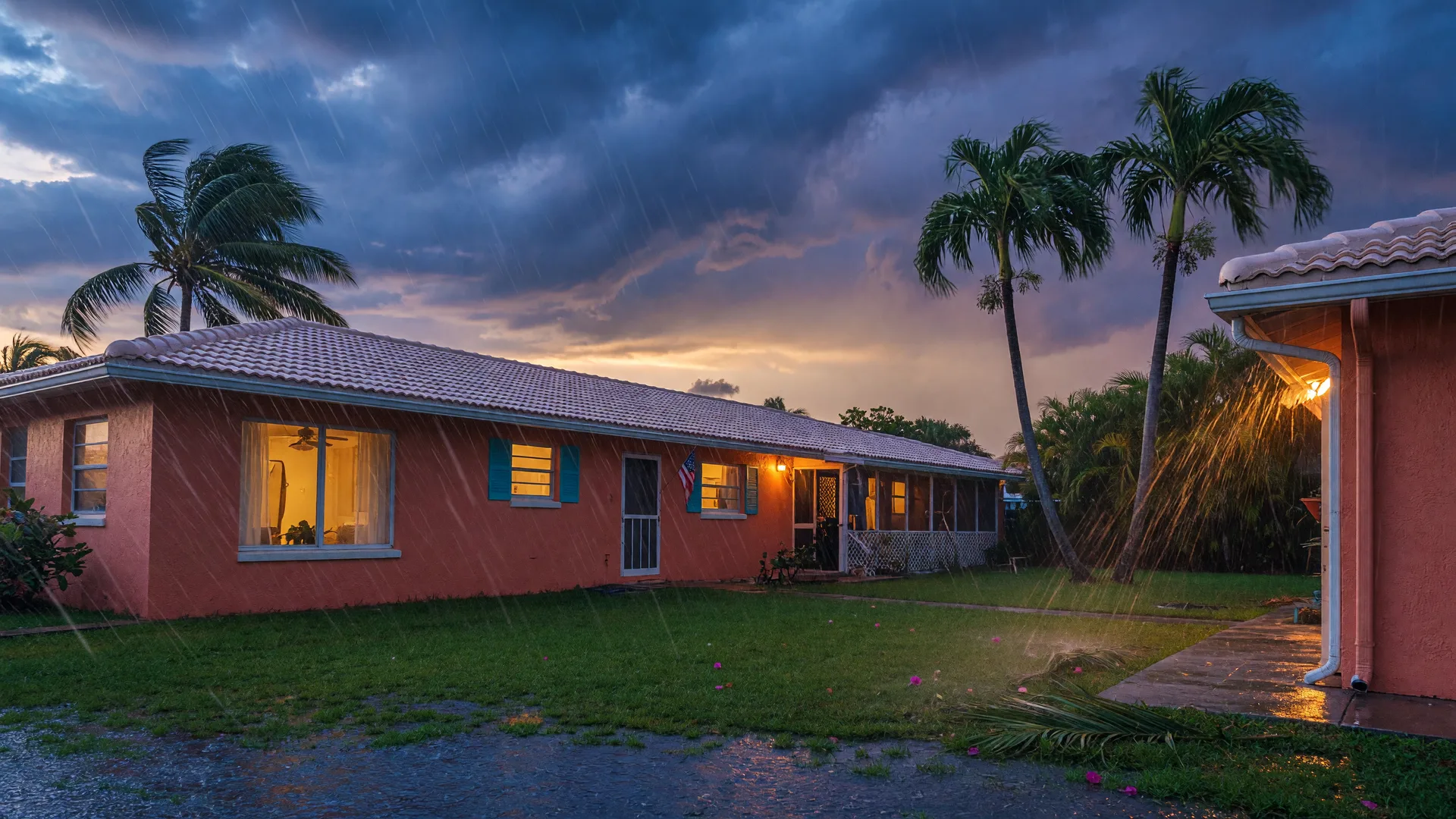
In South Florida, the rainy season officially runs from May 15 to October 15, the roughly five months when the region receives most of its yearly rainfall. That calendar is also the home care calendar. None of the checks below needs a contractor; they take an hour, a ladder, and the habit of doing them early in the season. Home care in a community listens to the weather: you work ahead of the rain, not against it. En el sur de la Florida, la temporada de lluvias va oficialmente del 15 de mayo al 15 de octubre, los cinco meses en que la regiÃÂÃÂÃÂón recibe casi toda su lluvia anual. Ese calendario es tambiÃÂÃÂÃÂén el calendario del cuidado de la casa. Ninguna de estas revisiones requiere un contratista; toman una hora, una escalera y la costumbre de hacerlas al inicio de la temporada. El cuidado del hogar escucha al clima: se trabaja antes de la lluvia, no en contra.
Start at the top: the roof and the gutters Empiece por el techo y los canales
The roof and the gutters direct most of a tropical summer. Check for missing or lifted tiles, and prune any branch that touches the house. Clean the gutters and downspouts at least twice during the season, and point the downspouts well away from the foundation. A clogged gutter can turn days of rain into a slow leak, and a slow leak is the most expensive repair to discover late. El techo y los canales manejan la mayor parte de un verano tropical. Revise las tejas faltantes o levantadas y pode cualquier rama que toque la casa. Limpie los canales y bajadas de agua al menos dos veces durante la temporada y oriente la salida del agua lejos de la cimentaciÃÂÃÂÃÂón. Un canal saturado puede convertir dÃÂÃÂÃÂÃÂas de lluviaen una filtraciÃÂÃÂÃÂón, y la filtraciÃÂÃÂÃÂón es la reparaciÃÂÃÂÃÂón mÃÂÃÂÃÂás cara de descubrir tarde.
Walk the yard the day after a storm Camine el patio un dÃÂÃÂÃÂÃÂa despuÃÂÃÂÃÂés de la tormenta
The day after a normal rain, walk the property in shorts and you will see what the dry season hides: the low spots where water stands against the wall, the flat areas that hold puddles for days, and the downspout ends that stopped sinking. If you see the same wet spot near the foundation twice, fix the grade or the drain this season, before it becomes an inside conversation. Un dÃÂÃÂÃÂÃÂa despuÃÂÃÂÃÂés de una lluvia normal, camine la propiedad en short y verÃÂÃÂÃÂá lo que la temporada seca no muestra: los puntos bajos donde el agua queda contra la pared, las zonas planas que la retienen dÃÂÃÂÃÂÃÂas y los extremos de las bajadas que ya no drenan. Si ve dos veces el mismo lugar hÃÂÃÂÃÂúmedo cerca de la cimentaciÃÂÃÂÃÂón, corrija el nivel o el desagÃÂÃÂÃÂüe esta temporada, antes de que se convierta en un problema interior.
Give the air conditioner its seasonal visit DÃÂÃÂÃÂé al aire acondicionado su visita de temporada
Heat and rain together make humidity, and the air conditioner does the quiet work of the whole wet season. Clean or replace the filter when the season begins, and check that the condensation drain runs to the outside instead of dripping where it should not. A dry, comfortable house feels better and will probably cost less in energy than a house that runs a struggling unit. El calor y la lluvia juntos crean humedad, y el aire acondicionado hace el trabajo silencioso de toda la temporada. Limpie o cambie el filtro cuando la temporada empiece y revise que el desagÃÂÃÂÃÂüe de condensaciÃÂÃÂÃÂón salga hacia afuera y no gotee donde no debe. Una casa seca y cÃÂÃÂÃÂómoda se siente mejor y tambiÃÂÃÂÃÂén suele costar menos en energÃÂÃÂÃÂÃÂa que una que fuerza la mÃÂÃÂÃÂáquina.
Close the small openings before water finds them Selle las aberturas pequeÃÂÃÂÃÂñas antes de que el agua las encuentre
In a tropical city, water does not need a big opening. Review the seal on the sliding glass doors, the weather stripping on the main doors, the gap under the garage door, and the caulk around the windows and the lanai. A tube of caulk and a strip of weather sealing cost little; the stains and bugs they avoid cost real money. It is the least dramatic maintenance item, andfamilies feel it all day. En una ciudad tropical el agua no necesita una entrada grande. Revise el empaque de las puertas de vidrio, el sello de las puertas principales, la rendija bajo la puerta del garaje y el sellador alrededor de las ventanas y el marques. Un tubo de sellador y una tira de espuma cuestan poco; las filtraciones y los insectos que evitan valen la pena. Es la tarea de mantenimiento menos dramÃÂÃÂÃÂática, y las familias la notan todo el dÃÂÃÂÃÂÃÂa.
Know your flood zone before the storm Conozca su zona de inundaciÃÂÃÂÃÂón antes de la tormenta
Flood damage is not covered by a standard homeowners policy; it takes a separate policy, andflood policies carry a waiting period before they take effect. Check the flood zone of any address you own or are considering, talk to your insurance agent at the start of the season, anddecide with time. The zone of your address does not change, but your preparation calendar does, so make the call in the calm months, not during the storm. El daÃÂÃÂÃÂño por inundaciÃÂÃÂÃÂón no estÃÂÃÂÃÂá cubierto por una pÃÂÃÂÃÂóliza normal de hogar; requiere una pÃÂÃÂÃÂóliza por separado, y las pÃÂÃÂÃÂólizas de inundaciÃÂÃÂÃÂón tienen un perÃÂÃÂÃÂÃÂodo de espera antes de tener vigencia. Revise la zona de inundaciÃÂÃÂÃÂón de la direcciÃÂÃÂÃÂón donde vive o piensa vivir, hable con su agente de seguros al inicio de la temporada y decida a tiempo. La zona de su direcciÃÂÃÂÃÂón no cambia, pero su calendario de preparaciÃÂÃÂÃÂón sÃÂÃÂÃÂÃÂ.
Nanci Gilbert, PA is a South Florida realtor who guides growing families, sellers, and buyers across Miami-Dade and Broward. Questions about this topic? She answers every message within one business day. Nanci Gilbert, PA es una realtor del sur de la Florida que guía a familias en crecimiento, vendedores y compradores en Miami-Dade y Broward. ¿Preguntas sobre este tema? Responde cada mensaje dentro de un día hábil.