

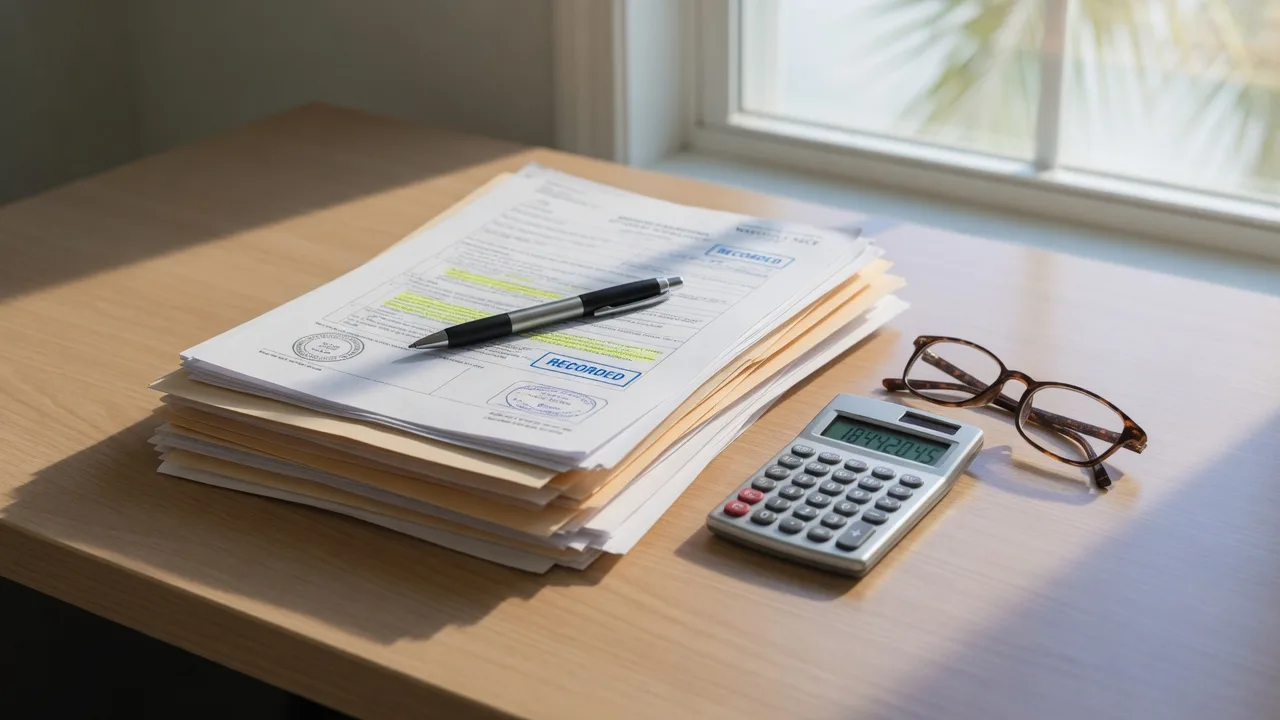
When out-of-state buyers compare monthly costs, property taxes are often the biggest surprise, because Florida has no state income tax and collects more through property. The details matter just as much for locals moving to a new address. The bill follows the home, not the owner, and a few Florida rules change the math in predictable ways. Cuando los compradores de otros estados comparan los costos mensuales, los impuestos a la propiedad suelen ser la mayor sorpresa, porque la Florida no tiene impuesto estatal sobre la renta y recauda más a través de la propiedad. Los detalles importan igual para los locales que se mudan a una nueva dirección. La cuenta sigue a la casa, no al dueño, y algunas reglas de la Florida cambian las cifras de maneras predecibles.
Assessed value is not the same as market value El valor imponible no es lo mismo que el valor de mercado
Your tax bill is based on the assessed value set by your county property appraiser, not the price you pay. For the first year you own a primary home, that assessed value usually lands close to the purchase price, which is why the first bill can feel higher than the previous owner's. Expect it, and budget from the new number. Su cuenta de impuestos se basa en el valor imponible que establece el tasador de propiedades del condado, no en el precio que usted paga. Durante el primer año en que es dueño de una vivienda principal, ese valor imponible suele quedar cerca del precio de compra, por eso la primera cuenta puede sentirse más alta que la del dueño anterior. Espérelo y haga su presupuesto desde el número nuevo.
The homestead exemption lowers the taxable value La exención de vivienda reduce el valor imponible
If the home is your permanent residence and you file by the deadline, Florida's homestead exemption can remove up to $50,000 from the assessed value. The first $25,000 applies to all taxing authorities, including schools; the second portion is adjusted for inflation and applies to the non-school taxes. Filing is a one-time step that changes the bill every year after. Si la casa es su residencia permanente y presenta la solicitud antes de la fecha límite, la exención de vivienda de la Florida puede quitar hasta $50,000 del valor imponible. Los primeros $25,000 se aplican a todas las autoridades impositivas, incluidas las escuelas; la segunda parte se ajusta por inflación y se aplica a los impuestos que no son escolares. Presentar la solicitud es un paso único que cambia la cuenta todos los años siguientes.
Save Our Homes caps the annual increase Save Our Homes limita el aumento anual
Once a homestead exemption is in place, Florida law limits how fast the assessed value can rise each year: the lower of 3% or the inflation rate. That cap is why long-time Florida owners often pay less than newcomers with similar homes. The home you buy resets the clock, so your bill starts from today's value. Una vez que la exención de vivienda está activa, la ley de la Florida limita qué tan rápido puede subir el valor imponible cada año: el menor entre el 3% o la tasa de inflación. Ese tope explica por qué los dueños de larga data en la Florida suelen pagar menos que los recién llegados con casas similares. La casa que compra reinicia el reloj, así que su cuenta parte del valor actual.
Portability can carry your cap with you La portabilidad puede llevar su tope con usted
If you already own a Florida homestead and buy another within the allowed window, you may transfer up to $500,000 of your accumulated Save Our Homes benefit to the new home. For move-up buyers, that benefit can soften the tax increase that usually comes with a larger, more expensive house. Si ya tiene una exención de vivienda en la Florida y compra otra dentro del plazo permitido, puede transferir hasta $500,000 de su beneficio acumulado de Save Our Homes a la nueva casa. Para los compradores que quieren crecer, ese beneficio puede suavizar el aumento de impuestos que suele venir con una casa más grande y más cara.
Verify the numbers before you commit Verifique las cifras antes de comprometerse
Every county has a property appraiser's office, and its website shows the current assessed value and tax history for any address. Your lender's estimate is a starting point; the appraiser's record is the source. Nanci walks buyers through both before they make an offer, so the monthly number in the budget matches the bill that arrives. Cada condado tiene una oficina del tasador de propiedades, y su sitio web muestra el valor imponible actual y el historial de impuestos de cualquier dirección. La estimación de su prestamista es un punto de partida; el registro del tasador es la fuente. Nanci acompaña a los compradores en ambos antes de que hagan una oferta, para que el número mensual del presupuesto coincida con la cuenta que llega.
Related guides Guías relacionadas
Nanci Gilbert, PA is a South Florida realtor who guides buyers and sellers across Miami-Dade and Broward. Questions about this topic? She answers every message within one business day. Nanci Gilbert, PA es una realtor del sur de la Florida que guía a compradores y vendedores en Miami-Dade y Broward. ¿Preguntas sobre este tema? Responde cada mensaje dentro de un día hábil.